We use cookies to improve your experience on our websites and to make visit statistics.

Building Smarter Pharma Workflows with AI-Driven Automation
September, 2026
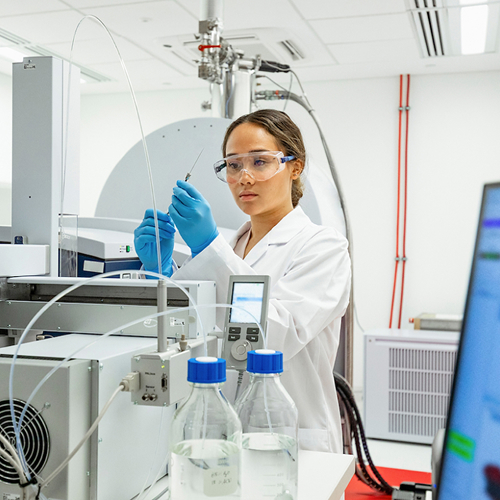
Helping the Pharma Industry Bring Medicines to Market Faster
Pressure on the Pharma industry to deliver medicines to patients faster has never been higher — and advanced technology is central to closing that gap. From the very early stages of drug discovery to commercial-scale manufacturing, every phase of the value chain offers an opportunity to eliminate inefficiency while preserving data quality and rigor.
Commercializing a new drug still typically takes 10–15 years, and most candidates that enter clinical development never reach the market. The failures that occur late in clinical development are especially costly, as they follow years of substantial investment. Better predictivity and more robust data are some of the most effective levers the industry has for improving R&D timelines.
Automation and digitalization can't make the biology go faster, but they can eliminate the operational bottlenecks — manual handling, fragmented data capture, low-throughput screening — that add time and variability.
Opportunities to Improve Efficiency Across the Development Pipeline
Despite advances in technology, it is estimated that about two thirds of a pharma company’s day-to-day work still relies on manual processes. This isn't confined to a single stage: it spans the entire lifecycle, from early discovery (across multiple scientific disciplines) to late-stage development and GMP manufacturing, including quality control (QC).
The right automation depends on the application and the unique requirements of each workflow — there is no one-size-fits-all platform. Guided by this principle, Galatek's R&D and engineering teams focus on the Life Sciences areas where automation has the greatest potential to improve throughput, reproducibility, and data quality, including:
• Small molecule synthesis: accelerating compound synthesis through automated reaction and purification workflows, enabling faster drug screening and design–make–test cycles

• Antibody development: automating the main steps of the core workflow, including plasmid construction, cell line development, cell culture, antibody expression, and purification
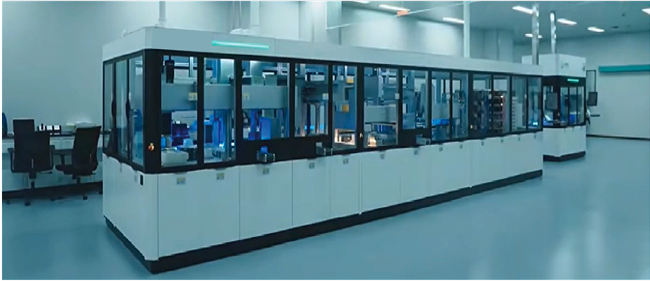
• Organoid-based drug screening: using 3D organoid models to improve the physiological relevance of screening assays, strengthening early safety assessment and toxicological prediction

• QC inspection: automating LC and LC-MS QC labs to ensure quality and compliance at manufacturing scale.
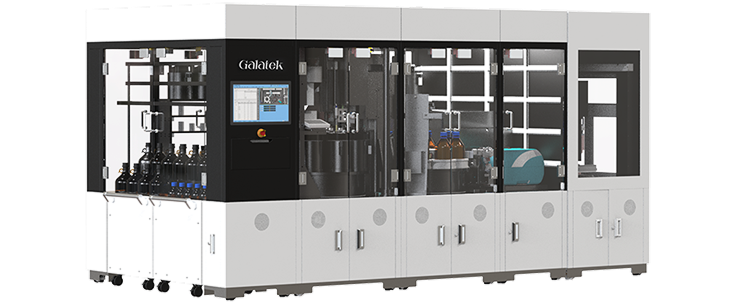
Leading Change in Pharma with Automation and Software Intelligence
Laboratory automation accelerates the most time-consuming, complex, and error-prone tasks, but the value of moving away from manual, fragmented, resource-intensive workflows isn't only speed. Building digitalization and data integrity into the workflow itself — rather than reconciling them after the fact — is what really enables reproducible, traceable, and scalable science.
The more transformative shift comes when automation is combined with AI — moving beyond process standardization to intelligent decision support. By embedding AI into automated workflows, organizations can analyze complex data in real time, identify patterns, detect anomalies, and make informed decisions that will continuously optimize performance.
The result that many labs are striving towards is an intelligent, adaptive lab designed to meet the demands of modern scientific research. And this is what will truly shorten the path from discovery to market, helping organizations stay competitive in an increasingly fast-moving pharmaceutical landscape.
Taking steps towards this automation is accessible now, regardless of a company’s automation or digital maturity. Organizations can implement and scale according to their ambitions — from integrated workflows to enterprise-wide automation across a whole facility.
Learn more about how your teams can address the challenges associated with manual laboratory processes in our on-demand webinar, "How Lab Automation Overcomes Pharma's Biggest Bottlenecks."
FAQs
How can automation shorten drug development timelines without changing the underlying biology?
Automation can't accelerate the biology itself, but it can eliminate the operational bottlenecks that add time and variability around it, including manual handling, fragmented data capture, and low-throughput screening. With most late-stage clinical failures following years of investment, reducing avoidable delays earlier in the pipeline has an outsized effect on overall program cost and speed.
What lab processes in pharma still rely on manual work despite advances in automation?
An estimated two-thirds of day-to-day work in a pharma organization still relies on manual processes, spanning the full lifecycle: early discovery across multiple scientific disciplines, late-stage development, GMP manufacturing, and quality control.
Can small molecule synthesis and screening be automated to speed up design-make-test cycles?
Yes. Automating reaction and purification workflows for compound synthesis can accelerate drug screening and shorten design-make-test cycles, which are typically iterative and time-intensive when done manually.
How does automating antibody development improve consistency across the workflow?
Automating the core steps of antibody development (plasmid construction, cell line development, cell culture, antibody expression, and purification) standardizes a process that otherwise depends on manual handling at each stage, reducing the variability that comes with technician-dependent execution.
Why are organoid models being used earlier in drug screening?
3D organoid models offer greater physiological relevance than traditional 2D screening, strengthening early safety assessment and toxicological prediction before a candidate advances further in development.
Contact Us