We use cookies to improve your experience on our websites and to make visit statistics.

From Manual to Intelligent: How Automation is Building the Foundation for AI-Assisted Pharma QC
September, 2026
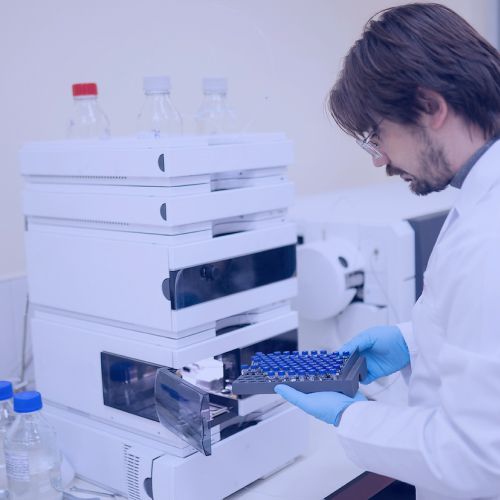
In Quality Control (QC) laboratories, analysts spend a large portion of each day on repetitive tasks — weighing reagents, preparing mobile phases, pipetting and diluting, adjusting pH, filtering and degassing, filling out logbooks.
This manual mode has been running for decades. No one considered it perfect, but it was flexible, has been a low barrier to entry, and has remained the status quo.
That is now changing. With sample throughput increasing and regulatory requirements tightening, the limitations of manual workflows are becoming increasingly evident. The convergence of automation and AI now offers QC labs a genuinely viable path to transformation.
Manual Operations Fuel a Self-Reinforcing Cycle of Errors and Low Throughput
The challenges associated with manual operations are not just about speed. Their greatest impact is on repeatability, quality, and compliance, where undetected human errors can have significant consequences. These challenges cannot be addressed simply through additional training or by asking staff to be more careful.
About 40% of quality issues in QC¹ are attributed to human error - not due to carelessness, but to cognitive overload under multitasking conditions when systematic lapses become inevitable.² High staff turnover further exacerbates the problem, increasing the risk of recurring deviations.
Manual workflows also don’t scale with fluctuating demand because of inherent constraints due to workforce availability, which limits throughput. When sample pre-treatment depends on analysts performing each step manually and sequentially — with little opportunity for parallelization or acceleration — the labor and time required to increase capacity grow almost linearly.
Importantly, these challenges do not occur in isolation. Errors trigger Out-of-Specification (OOS) investigations and can prompt an FDA warning letter – both of which consume significant time and resources.¹ At the same time, understaffing increases both the likelihood of errors and the pressure on throughput, creating a self-reinforcing cycle.
Breaking this cycle does not require more supervision, additional training, or replacing experienced analysts. It requires addressing the underlying process-level causes of error and inefficiency. This is where automation delivers the greatest value: by addressing the steps that are most prone to error, most time-consuming, and most difficult to standardize.
Automation Meets AI: Complete QC Laboratory Workflows
Meaningful transformation happens when all steps of the workflow are connected – from sample preparation and transfer to data generation and analytics. With this foundation in place, in suitable, validated applications, AI can be applied to tasks where it excels within the workflow: pattern recognition, deviation prediction, and scheduling optimization. AI supports these tasks but does not make final regulated QC decisions.
Galatek's platforms combine automation hardware with software that spans the workflow from sample preparation through analysis, creating the structured, traceable execution and data foundation required for validated AI-assisted applications.
Data Continuity
While efficiency and improved quality are the primary benefits of laboratory automation, a third advantage is equally important but frequently overlooked: data continuity.
Every step of a regulated QC process must generate complete, verifiable records. In traditional manual workflows, however, sample information, preparation records, instrument data, and analytical results are scattered across multiple systems, spreadsheets, and paper logs. Rather than forming a continuous evidentiary chain, they exist as disconnected data points that must be manually reconstructed during audits or investigations — a process that is both time-consuming and prone to error, and inherently risky.
This fragmented approach is increasingly incompatible with regulatory expectations. Frameworks such as PIC/S PI 041-13 and the WHO Guidelines on Data Integrity4 require data to comply with the ALCOA+ (Attributable, Legible, Contemporaneous, Original, Accurate, Complete, Consistent, Enduring, and Available) principles throughout its lifecycle. Paper records and fragmented data – if poorly controlled - fall short of these requirements.
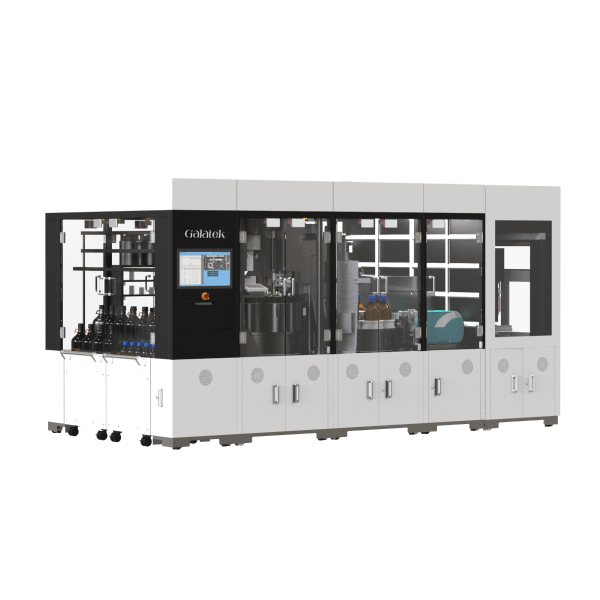
Galatek's Integrated Mobile Phase Preparation System addresses this challenge through end-to-end data correlation where sample IDs, preparation parameters, instrument run records, and test results are automatically linked and traceable. With this level of data continuity, QC labs move from documenting isolated process steps to maintaining a continuous digital record throughout the entire testing workflow.
The Path to Modern QC Labs
The transformation of QC laboratories — from manual, fragmented workflows to automated, continuous processes — will not happen overnight, but the direction is clear.
Galatek's portfolio of automation solutions with intelligent assistance applied where configured and validated, enabling organizations to modernize at their own pace, addressing the most critical bottlenecks first, then expanding automation incrementally.
For QC laboratories challenged by manual processes, increasing regulatory expectations, and workforce shortages, end-to-end automation with intelligent assistance is becoming an increasingly important capability for maintaining quality, ensuring data integrity, and sustaining operational efficiency.
As mobile phase preparation and instrument loading become fully automated and traceable, analysts are freed from repetitive manual tasks to focus on interpreting data, developing and optimizing methods, assessing anomalies, and driving continuous improvement.
Discover our portfolio of solutions for QC labs:
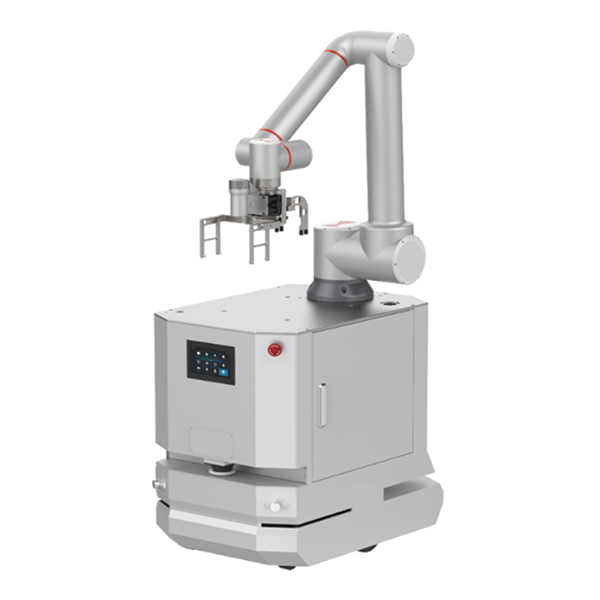
| Integrated Mobile Phase Preparation System | AGV: Sample Loading and Intelligent Scheduling |
| Automated preparation of mobile phases used in HPLC and LC-MS methods. | This self-navigating vehicle delivers samples and materials between different workstations. |
 |  |
| Learn more | Learn more |
References
1.Vector Consulting Group. Getting to the true root of lab quality problems. (2024)
2.Compliance Architects. The Dollar Cost of a Warning Letter: Analyzing the 15% Rule.
3.Pharmaceutical Inspection Co-Operation Scheme (PIC/S). Good Practices for Data Management and Integrity in Regulated GMP/GDP Environments. (2021)
4.WHO Expert Committee on Specifications for Pharmaceutical Preparations. TRS 1033 - Annex 4: WHO Guideline on data integrity. (2021)
FAQs
How can automation help minimize human error in QC labs?
Roughly 40% of QC quality issues are attributed to human error, driven less by carelessness than by cognitive overload during repetitive, multitasked manual work — a pattern that additional training or supervision doesn't fully resolve, since it's rooted in the process itself. Automating the most repetitive and error-prone steps removes that cognitive burden, and high staff turnover becomes less of a risk factor since consistency no longer depends on individual analysts retaining institutional knowledge.
Why don't manual QC workflows scale well as sample volume increases?
When sample preparation depends on analysts performing steps sequentially by hand, there's little room for parallelization. Labor and time requirements grow roughly linearly with capacity, so throughput is capped by workforce availability rather than demand.
What role can AI play in a QC lab without replacing regulated decision-making?
In validated applications, AI can support tasks like pattern recognition, deviation prediction, and scheduling optimization — but final regulated QC decisions remain with qualified personnel, not the AI system.
Why is fragmented data a compliance risk, not just an inefficiency?
When sample records, preparation logs, instrument data, and results live across separate systems and paper logs, reconstructing a complete record for an audit or investigation is manual and error-prone. Regulatory frameworks require data integrity to be maintained throughout its lifecycle, which fragmented, poorly controlled records fall short of.
Contact Us